Check what matters
Assert on status codes, keywords, JSON values and the final URL. Catch the broken page that still returns 200.
Know when your site goes down. See what failed. Get the right people involved, with the detail already waiting for them.
Choose from 30 locations in 20 countries and territories.
Free tier included. No credit card required.
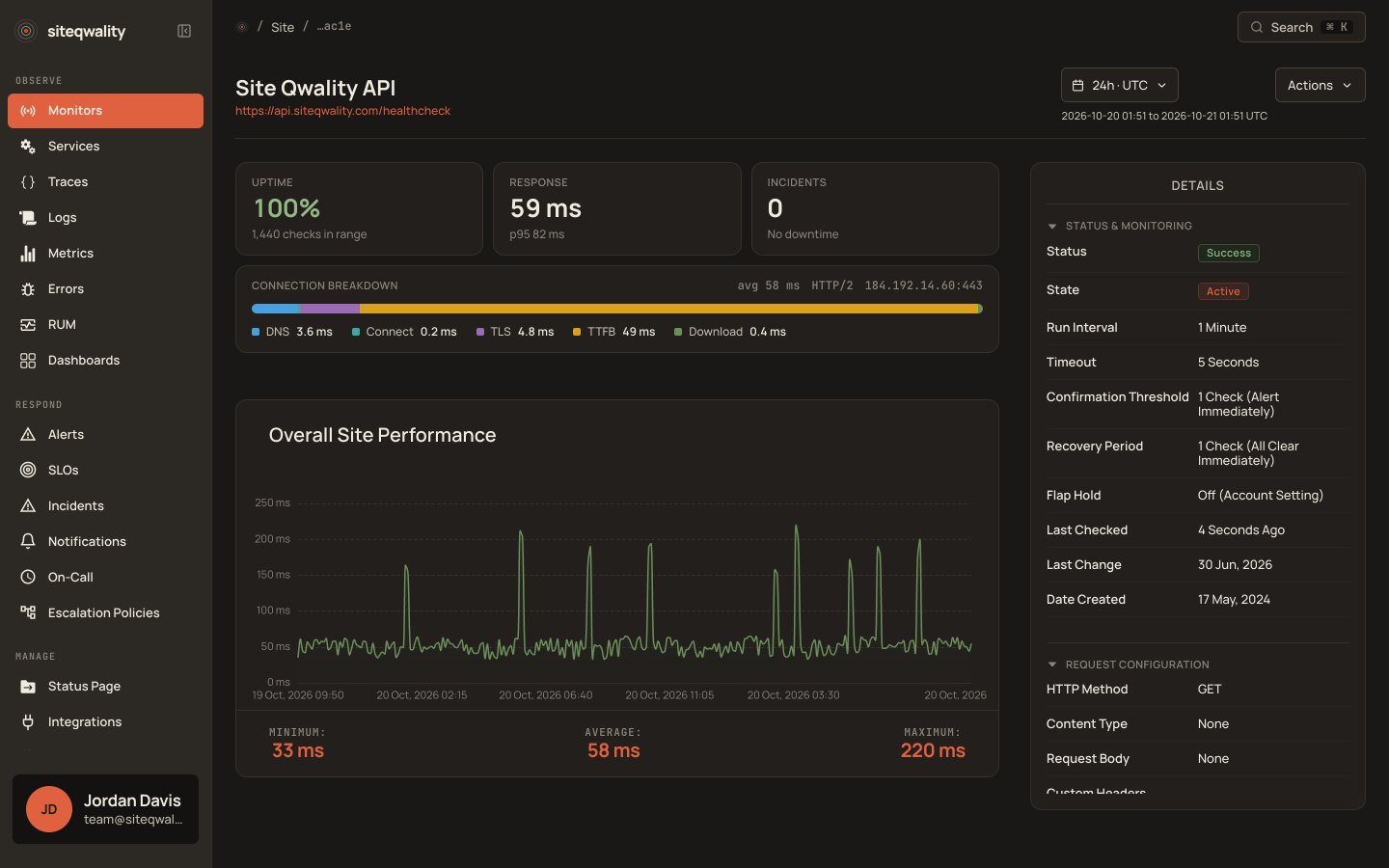

Make sure your endpoint returns the right response, not simply a response. Keep your checks precise and your alerts useful.
Assert on status codes, keywords, JSON values and the final URL. Catch the broken page that still returns 200.
Recheck a failure from the same location or another cloud, and require several failed checks in a row or several locations to agree before an alert goes out. A flapping endpoint sends one notice, not one per bounce.
Send outage and recovery alerts to Slack, Microsoft Teams, SMS or email, and page whoever is on call.
A practical view of the information behind an uptime alert.
Choose the endpoint, interval and assertions for the service you depend on. Keep the checks specific to what your application needs.
Check from AWS, Google Cloud and Microsoft Azure locations, and choose how many must fail before you are alerted.
Inspect the phases of an HTTP request instead of guessing whether the slowdown happened in DNS, the connection or the application.
Per-phase timings give a slow response a useful starting point.
Bring a confirmed failure to your team. Use incidents and status pages to keep the investigation and customer updates connected.
Choose the notification channels and response settings that fit your service.
A 30-second monitor sees an outage on its next check. You decide how many failed checks, or how long a wait, it takes before anyone is alerted.
HTTP and HTTPS, TCP ports, ICMP ping, DNS records, and certificate and domain expiry. On HTTP you can assert on status codes, response times, body keywords and JSON paths. A TCP check can require a TLS handshake and an expected response, and a ping check a packet loss threshold.
Transient connection failures are retried before anything is recorded, and a failed check can be rechecked from the same location or from another cloud before it counts. You can require several failed checks or locations before an alert, and a monitor that keeps bouncing sends one notice instead of a page per bounce.
No agent, no SDK, no DNS changes. Paste a URL and the first check runs immediately. You can also manage monitors programmatically via the REST API.
Yes. The free tier includes uptime monitoring with no credit card. Add capacity and faster cadences only as you grow.
Each comparison has its own page: Pingdom, UptimeRobot, StatusCake and Uptime Kuma.